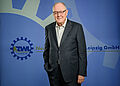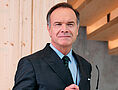
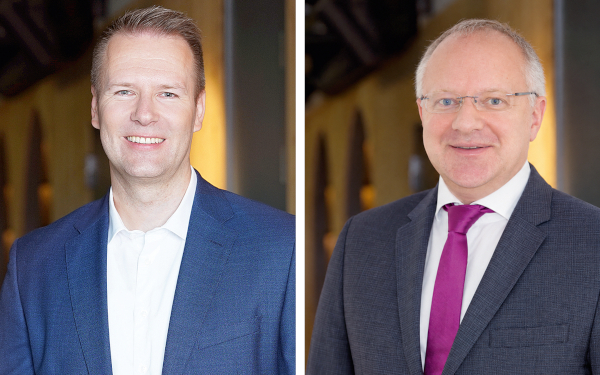
Eleving Group issued a six-year bond with a volume of EUR 200 million via a private placement. Following the placement, an exchange offer for the bond 23/28 was launched. The flow is somewhat unusual. But shortly before the start of the transaction, market conditions became increasingly challenging. Interest rates moved higher and volatility increased. Given the heightened uncertainty, it was difficult to predict market conditions even over a three-week period. Therefore, this procedure was chosen to increase transaction security, as Māris Kreics and the financial advisor Manfred Steinbeisser explain.
BOND MAGAZINE: You issued a six-year bond with a volume of EUR 200 million and a coupon of 9.00% p.a. via a private placement. Following the placement, an exchange offer was launched for the publicly placed 13.00% bond (due 2023/38), covering a volume of up to EUR 25 million. What was the reason for choosing this approach?
Steinbeisser: When Eleving first discussed the transaction with us, the original plan was to follow the more traditional sequence. We intended to start with an exchange offer for existing bondholders, followed by a public offer for new subscriptions, and then complement the transaction with institutional sales and private placements, similar to the approach we successfully used for our EUR 275 million transaction last year.
However, as we moved closer to execution, market conditions became increasingly challenging. Interest rates moved higher, volatility increased and investor sentiment became noticeably more nervous. In such an environment, we asked ourselves how we could accelerate the process and reduce the period during which the transaction would be exposed to market risk.
Fortunately, we had already completed an intensive investor marketing effort in August, during which management met with almost 30 investors through a combination of in-person meetings and virtual discussions. These meetings helped us establish the foundations for a successful transaction and provided valuable feedback from the market. As a result, we were in a position to move quickly and execute a private placement with a highly flexible timetable once market conditions required a faster approach.
At the same time, Eleving did not want to abandon the exchange offer. The outstanding 2028 bond is held by many loyal long-term investors who have supported the company over the years. It was therefore important to provide these investors with an attractive opportunity to continue their investment in Eleving. For this reason, we deliberately reserved EUR 25 million out of the total EUR 200 million transaction size and did not allocate this portion during the private placement. This amount is now being offered to retail investors through a public exchange offer.
We fully appreciate that this sequence may not be the standard order typically seen in the bond market. However, we believe it was the most appropriate solution under the prevailing circumstances. Given the heightened uncertainty, it was difficult to predict market conditions even over a three-week period. By securing the institutional demand first, while preserving capacity for the exchange offer, we were able to combine execution certainty with our commitment to existing bondholders.
More broadly, this transaction underlines the importance of preparation, active investor engagement and execution flexibility. In rapidly changing markets, issuers benefit from being able to adapt the format and timing of a transaction to prevailing conditions rather than following a predefined process. Having already established strong investor relationships and receiving continuous market feedback allowed us to move decisively when the execution window was available.
BOND MAGAZINE: The 2023/28 bond had a volume of EUR 90 million. Will the portion that was not exchanged be called and repaid early?
Kreics: Yes, that is the plan. From a financing perspective, this transaction allows us to address our upcoming maturities well in advance and further strengthen the Group’s funding structure. The proceeds from the new EUR 200 million bond issuance will primarily be used to refinance our EUR 90 million bonds maturing in 2028. Part of the proceeds will also be used to refinance liabilities on Mintos and to support the continued development of our loan portfolio. At the same time, it was important for us to offer our existing retail investors the opportunity to remain invested with Eleving Group. We have therefore reserved EUR 25 million of the new issuance for the public exchange offer. Investors who choose to participate can exchange their existing bonds for the new six-year bonds. For the bonds that are not exchanged, we have already published a conditional notice of early voluntary redemption. Subject to the conditions set out in the notice, these bonds are expected to be redeemed on or around 2 November 2026 at 101% of their nominal value. From our perspective, this is a proactive liability management exercise – we are refinancing well ahead of maturity, extending our debt maturity profile and broadening our access to long-term funding, while at the same time giving our existing bondholders a opportunity to continue investing with Eleving Group.
BOND MAGAZINE: In previous years, you successfully placed bonds publicly, particularly in the Baltic region. Do you plan to rely solely on private placements in the future?
Kreics: We evaluate each issuance individually jointly with our Financial Advisor from Aalto Capital, considering market conditions, our funding needs and the expectations of both institutional and retail investors. This time, we saw strong interest and attractive conditions from international institutional investors, which is why we decided to structure the issuance primarily as a private placement. At the same time, retail investors in both Germany and the Baltics remain an important part of our investor base. The public exchange offer reflects that – we wanted to give our existing retail bondholders the opportunity to participate in the new issuance and continue investing with Eleving Group. Going forward, we intend to maintain a diversified approach. We will continue to consider both public and private transactions, choosing the structure that best fits our funding requirements, market conditions and investor demand at the time.
BOND MAGAZINE: Where are the investors based?
Kreics: If you look at the high-yield bond market, a significant part of the demand traditionally comes from the UK and the US, and we saw that in this transaction as well. But what was particularly encouraging was the interest from smaller family offices and investment firms in Scandinavia, Switzerland and the Baltics. So overall, we had a good mix of investors from different markets, which is exactly what we want as we continue to broaden our international investor base.
BOND MAGAZINE: You are experiencing strong international growth, particularly in emerging markets. What is your funding strategy for the coming years?
Kreics: Our funding strategy is closely aligned with the Group’s growth, and diversification is at the core of it. As Eleving Group continues to grow across its markets, we want our funding base to develop alongside the business and avoid becoming overly dependent on any single source of financing. We will continue to use platforms such as Mintos as part of our funding mix, alongside the bond market and other sources of financing. At the same time, one of our key priorities is to increase local-currency funding in our markets outside the euro area. This is particularly important because it allows us to better match the currency of our funding with the currency of our loan portfolio and therefore reduce our exposure to foreign exchange risk. Kenya is a good example: around 85% of our funding there is already raised locally. We are working to replicate this approach in other markets and currently have tens of millions of euros equivalent in additional local funding opportunities in the pipeline. Over time, the objective is to build an increasingly diversified funding structure across instruments, investor groups and currencies.
The interview was conducted by Christian Schiffmacher, www.fixed-income.org